Religious Nationalism, Populist Charisma, and the Sacred
Ahead of the 2026 UCSIA Summer School on Religion, Culture and Society, UCSIA hosted an online webinar featuring two alumni who returned to present their current scholarly work.
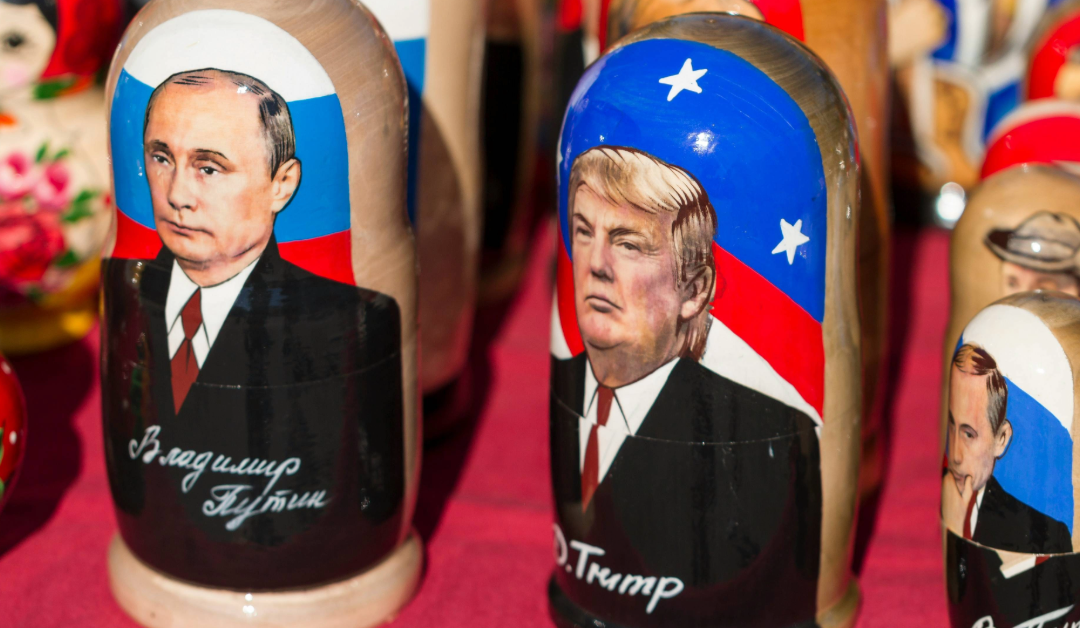
Religion and Nationalism in Russia
The first presentation was delivered by Marko Veković, Associate Professor of Political Science at the University of Belgrade and alumnus of the 2015 cohort. Drawing on his comparative research into Orthodox Christianity and political ideology in post-communist societies, Veković offered a theoretically grounded analysis of the Russki Mir doctrine — the “Russian World” concept — as a vehicle for religious nationalism under the Putin regime.
Situating his argument within the frameworks of Rieffer, Brubaker, and Soper & Fetzer, he traced the historically deep entanglement of church and state in Orthodox polities, from the Byzantine notion of symphonia to the Third Rome ideology and its contemporary political implementation.
His central argument — that Putin’s religious nationalism represents not an innovation but a reinvention of imperial-era orthodoxy, autocracy, and nationality — was substantiated with survey data from the 2017 PEW Research Center study on Central and Eastern Europe. Veković further extended his analysis to comparable dynamics in Serbia, where the Serbian Orthodox Church similarly reinforces a “Serbian World” ideology with documented consequences for regional stability.
→ Read his full article in The Routledge Handbook of Religion and Nationalism.
The Second Coming of Donald Trump
The second presentation was given by Daniel Nilsson DeHanas, Reader in Politics and Religion at King’s College London and alumnus of the 2008 cohort. DeHanas presented findings from his chapter on the religious dimensions of Donald Trump’s 2024 presidential campaign, focusing specifically on the meme culture of Truth Social.
Building on his typology of spiritual populism — comprising sacred, charismatic, redemptive, and apocalyptic dimensions, as developed in his 2023/2024 article in Democratization — DeHanas analysed image posts by Trump supporters in response to ten milestone campaign moments. His corpus revealed consistent patterns of Christological veneration, including the portrayal of Trump as a messianic or Christ-like figure, protected by angelic forces and opposed by demonic enemies.
He identified distinct spiritual constituencies on the platform — values voters, nostalgia voters, prophecy voters, and QAnon adherents — and argued that Truth Social functions as a “charisma factory”, continuously regenerating Weberian charismatic authority in ways that sustain and intensify apocalyptic populism.
Q&A
The subsequent Q&A session produced a rich exchange on the structural parallels between American evangelical communities and Russian Orthodoxy. Marko drew on José Casanova‘s work on their ideological convergence around shared conservative values. Daniel referred to Kristina Stöckl‘s research on religious rights in Russia. The final point of discussion was the role that local faith communities might play in countering the co-optation of religion by populist movements.
UCSIA Summer School 2026
The UCSIA Summer School 2026, themed around the digital experiences of religion, will take place in Antwerp during the final week of August. Junior scholars at PhD and postdoctoral level are invited to apply with a research project until 20 April 2026. Faculty for this edition includes theologian Jonas Kurlberg, anthropologist Yasmin Moll, and sociologist Alessandra Vitullo. The programme is fully funded; travel grants are available.