Programme
Submissions for the 2026 edition are currently closed.
Stay tuned: Sign up for the UCSIA Summer School newsletter and join us on LinkedIn and Facebook!
Call for papers 2026
From Disciples to Followers: Questioning the Digital Experience of Religions Online
The 2026 UCSIA Summer School draws attention to the ambivalence and enthusiasm brought forth by religion going digital, both locally and globally. Recognizing the increasing importance of digital ways of experiencing and communicating about faith, religious practice and identity, this year’s summer school focuses on the ways in which religious publics and religious forms of publicity are being reshaped by digital technologies, platforms and political economies. The online mediation of religion – whether in terms of theology, ritual, ethics, or politics – raises new questions about power, knowledge and ignorance. These questions emerge when long-standing religious traditions and their communities intersect with new industries and technologies.
The content of the summer school will be guided on the one hand by questions regarding the internal dynamics of religious traditions, such as:
- In what way are religious traditions impacted by online publics and practices? In what way are religious traditions, beliefs and practices impacted by religious publics online?
- How do religious traditions shape the formation of online publics?
- How does the online sphere transform authoritative notions of what constitutes a ‘genuine’ or ‘authentic’ individual or collective religious experience?
- Can the online sphere suffice for forming religious communities and cultivating religious selves, or does it merely serve as a tool or stepping stone to ‘analogue’ religion?
- How do the new religious publics created by digital technologies interact with the ‘traditional’ ones?
- Which role do online practices play in processes of globalization, uniformization or ‘deculturation’ of religious traditions?
On the other hand, questions of representation and (theo)politics will come to the fore, such as:
- What do concepts such as scale, context and authority mean when it comes to religion and the online sphere? How can we better understand the more implicit presence of religion in social practices and politics, both on- and offline?
- Which historical comparisons can be drawn between former and current media trends with regard to religious traditions and their influence on the social and political level?
- How are debates on the racialization of religion, theological and religious nationalism, and moral vocabularies (re)shaped through digital media?
- How do social media influence the relationship between religion, culture and the (democratic) state?
The UCSIA Summer School is a one-week mentoring programme that encourages junior scholars to explore the interdisciplinary ways of analysing the relationship between religion, culture and society. Key elements of the programme are expert lectures on theory-building and methodology, paper presentations by participants and individual mentoring by the faculty. For this interdisciplinary summer school on online publics and the digital experiences of religion, we welcome research projects from junior scholars (PhD or postdoctoral level) working in humanities, social sciences and law.
The UCSIA Summer School 2026, titled From Disciples to Followers: Questioning the Digital Experience of Religions Online, marks the end of a three-year cycle of summer schools, focused on the entanglements of religion and politics, the communities in which they take shape and function, and the injustices they entail or critique. The next UCSIA Summer School will be organized in 2028.
Faculty
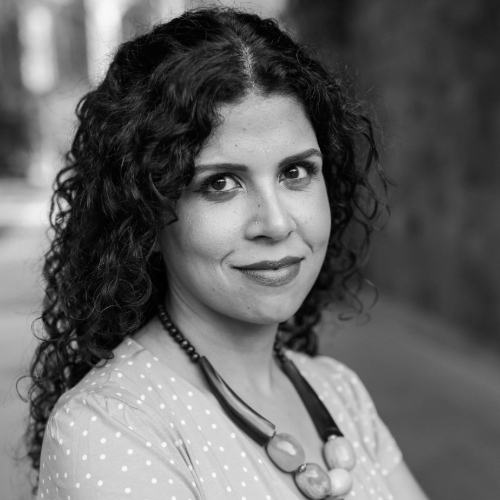
Yasmin Moll
Yasmin Moll is an Assistant Professor in the Department of Anthropology at the University of Michigan. A socio-cultural anthropologist, Dr. Moll’s research interests span the intersections of religion, media, and politics as well as questions of race, indigeneity and heritage activism in the Middle East and North Africa.
Her work explores what a methodological attunement to theological contestations reveals about everyday dynamics of ethical belonging and moral boundary-making in highly polarized contexts.
Publications
The Revolution Within, her latest book published by Stanford University Press, explores the social life of theology in relation to both Islamic television production and the 2011 Tahrir Square uprising.
Based on fieldwork in the Cairo branch of the world’s first Islamic television channel, it traces the ways in which pious struggles over the forms and ends of Islamic media articulated with broader struggles over the forms and ends of a “New Egypt,” radically reconfiguring both the religious and the revolutionary for millions of ordinary people. Taking seriously the internal fractures of Egypt’s Islamic Revival offers new insight on the intersections of religion and politics in the region beyond the conventional “Islamist versus secularist” frameworks that dominate analysis of authoritarianism in the Arab world.
Dr. Moll has published widely on the intersections of religion, media and politics in Muslim societies. This includes on subtitling on Islamic television as a form of critique (Public Culture), on what debates over new forms of Islamic media reveal about shifting theological evaluations of the religious and the secular (Cultural Anthropology), on how the conceptual history of Islamic media provincializes Euro-American decolonizing projects (International Journal of Middle East Studies) and on the changing criteria of ritual aptness in Islamic preaching in a digital media age (Comparative Studies in South Asia, Africa and the Middle East) .
Her most recent journal article asks how the idea of a “Godly ethnography” might unsettle in generative ways the taken-for-granted secular horizon of calls to decolonize anthropology (American Anthropologist).
Latest research
Dr. Moll’s newest research examines interactional ethics and theological debates as an overlooked aspect of intangible heritage for marginalized and racialized groups grappling with competing universalisms, with a focus on Nubians in Egypt.
Filmmaking
Dr. Moll trained in ethnographic filmmaking in NYU’s renowned Culture and Media Program. Her most recent film, Hanina/Homesick, screened at Annecy, Margaret Mead, and the Society for Visual Anthropology Film Festival, where it won honorable mention for best short.
Alessandra Vitullo
Alessandra Vitullo is a researcher and lecturer at Sapienza University of Rome, where she teaches sociology of communication and migration. She is the scientific coordinator of the Laboratorio Religioni e Mutamento Sociale (Laboratory on Religions and Social Change) at the SARAS Department of Sapienza University, co-director of the Network for New Media, Religion and Digital Cultures at Texas A&M University, and visiting scholar at the Universidade do Rio Grande do Sul (Brazil). Over the years, she has been a researcher and visiting lecturer at several international universities and research centers, including the University of Milan Bicocca, Fondazione Bruno Kessler (Trento), Texas A&M University, Uppsala University, and KU Leuven.
Her current research focuses on digital religious practices, online mediation of belief, and the ways digital cultures reshape religious authority, belonging, and everyday lived religion.
Her work makes her an ideal tutor for this summer school, as it sits at the intersection of religion, digital media, and social change. Vitullo’s research offers key insights into how religious identities, practices, and communities are transformed in online and hybrid environments—central questions for understanding contemporary religious experience in the digital age.
Publications
She has just published a new book with Professor Alessandro Saggioro: Religious Green Innovations: Technologies, Communities and Sustainability (2026, Springer Nature). Among her most prominent publications is the book I Religionauti. Studiare l’homo religiosus al tempo del web (The Religionauts: Studying the Homo Religiosus in the Age of the Web), published by Morcelliana in 2021.
Jonas Kurlberg
Jonas Kurlberg is a Visiting Lecturer at the University of Würzburg and an Honorary Fellow in the Department of Theology and Religion at Durham University, where he was previously Deputy Director of the Centre for Digital Theology and Programme Manager of the MA in Digital Theology.
For nearly a decade he has been researching and teaching at the intersection of Christian faith and digital culture. His scholarship ranges across digitally mediated Christian practices, the nature and task of theology in digital culture, and theological ethics in digital societies.
His work has engaged questions of liturgy, ecclesiology, missiology, and post-secularity in networked contexts, and has included co-authored research on how churches across Asia and Europe adapted to digital worship during the COVID-19 pandemic.

More recently, he has turned his attention to the theological and hermeneutical implications of using artificial intelligence for biblical interpretation. This research has been genuinely interdisciplinary. He has collaborated with computer scientists and media scholars, and as founding chair of the Global Network of Digital Theology he has built a community of scholars drawn from diverse traditions and regions of the world.
He also sits on the International Advisory Board of the URPP Digital Religion(s) Consortium at the University of Zurich and is co-editor of the T&T Clark Studies in Digital Theologies book series.
Kurlberg holds a PhD in British Literature and Culture from the University of Bergen, an MTh in Free Church Ecclesiology from London School of Theology, and an MSc in Sociology from the London School of Economics. He has previously held positions at the University of Edinburgh, Durham University, Spurgeon’s College, and Colombo Theological Seminary.
Publications
He is the author of Christian Modernism in an Age of Totalitarianism: T. S. Eliot, Karl Mannheim and the Moot (Bloomsbury, 2019), and co-editor of Missio Dei in a Digital Age (SCM Press, 2020) and the Oxford Handbook of Digital Theology (OUP, 2026).
Classes
Assignments
1. Plenary Lectures
The faculty presents its own current research and introduces or discusses theoretical and methodological frameworks within their disciplinary approach. Their lectures are followed by Q&A. The public lecture is open to the general audience of UCSIA. Join us at the UCSIA-house in Antwerp or via livestream.
2. Parallel Paper Sessions
The faculty members each tutor a group of five students of relating disciplines. In these small groups they will thoroughly discuss the papers of the group members. Each paper is allotted 25-30 minutes for its presentation, the remaining 60 minutes will be used for discussion.
In preparation of each session, students are asked to read the respective papers in advance. The active participation of students is required in order to ensure an enriching and lively discussion.
3. Individual tutorial
Students are invited to book an appointment (15 minutes/slot) with a tutor to receive personal feedback on conceptual, methodological or multidisciplinary problems within their own research project.
1. Paper presentation
During this 90-minutes session students will have the chance to present their research project and signal the difficulties they are facing in their particular research phase. The time allocated for the presentation of the research project is 25-30 minutes. Students are free to use visual aids or audiovisual equipment during the presentation. After the presentation, the assigned tutor and two respondents from the peer group will provide feedback (5-10 minutes each). The remaining time will be used for discussion.
2. Response
Each student will be a respondent during two presentations. A respondent should try to find the main problems in the research project and give useful feedback on research questions, concepts, methodology, ethics… Next to that, they can give the presenter some challenging insights from their own field of expertise. The scientific committee matches the presenters and the respondents based on research topic, discipline and research phase. In order to prepare thoroughly for this assignment, the detailed schedule and syllabus will be made available online by mid-July.
Classes
Biographical encounter
Getting to know each other: meet UCSIA, the faculty and your peers.
Plenary lectures
The faculty presents its own current research and introduces or discusses theoretical and methodological frameworks within their disciplinary approach. Their lectures are followed by Q&A. The public lecture is open to the general audience of UCSIA.
Parallel paper sessions
The faculty members will each tutor a group of five students of relating disciplines. In these small groups they will thoroughly discuss the papers of the group members. Each paper is allotted 25-30 minutes for its presentation, the remaining 60 minutes will be used for discussion.
In preparation of each session, students are asked to read the respective papers in advance. The active participation of students is required in order to ensure an enriching and lively discussion.
Individual tutorial
Book an appointment (15 minutes / slot) with a tutor to receive personal feedback on conceptual, methodological or multidisciplinary problems within your own research project.
Interdisciplinary encounter
Students discuss current issues in the study of religion with their peers, the faculty and the members of the scientific committee.
Preliminary schedule 2026
Monday
Tuesday
Wednesday
Thursday
Friday
9.00 - 10.30 am UTC+2
Welcome breakfast
Welcome & introduction by UCSIA
Parallel paper session 1
Plenary lecture 3
Plenary lecture 4
Individual tutorial
10.30 - 11.00 am UTC+2
Biographical encounter
Getting acquainted
Coffee break
Coffee break
Coffee break
Coffee break
11.00 - 12.30 am UTC+2
Interdisciplinary encounter
Discuss your research trajectory and disciplinary background with your peers
Parallel paper session 2
Parallel paper session 4
Parallel Paper Session 5
Discussion Forum: Scholarship & Public Engagement
Discuss contemporary challenges of conducting research on religion and public outreach with your peers
12.30 - 2.00 pm UTC+2
Lunch
Lunch
Lunch
Lunch
Farewell lunch
2.00 - 3.30 pm UTC+2
Plenary lecture 1
Parallel paper session 3
Guided tour of the historic city center of Antwerp
Plenary lecture 5
3.30 - 4.00 pm UTC+2
Coffee break
Coffee break
Coffee break
4.00 - 5.30 pm UTC+2
Plenary lecture 2
Individual tutorial
Leisure time
Individual tutorial
6.00 - 7.00 pm UTC+2
Dinner
7.00 - 8.30 pm UTC+2
Dinner
Network Dinner
Meet the UCSIA Summer School's alumni's, steering committee and its larger network
Public lecture
Preliminary schedule 2026
Monday
9.00 – 10.30 am UTC+2
Welcome breakfast
Welcome & introduction by UCSIA
10.30 – 11.00 am UTC+2
Biographical encounter
Getting acquainted
11.00 – 12.30 am UTC+2
Interdisciplinary encounter
Discuss your research trajectory and disciplinary background with your peers
12.30 – 2.00 pm UTC+2
Lunch
2.00 – 3.30 pm UTC+2
Plenary lecture 1
3.30 – 4.00 pm UTC+2
Coffee break
4.00 – 5.30 pm UTC+2
Plenary lecture 2
5.30 – 7.00 pm UTC+2
Free time
7.00 – 8.30 pm UTC+2
Dinner
Tuesday
9.00 – 10.00 am UTC+2
Parallel paper session 1
10.30 – 11.00 am UTC+2
Coffee break
11.00 – 12.30 am UTC+2
Parallel paper session 2
12.30 – 2.00 pm UTC+2
Lunch
2.00 – 3.30 pm UTC+2
Parallel paper session 3
3.30 – 4.00 pm UTC+2
Coffee break
4.00 – 5.30 pm UTC+2
Individual tutorial
5.30 – 7.00 pm UTC+2
Free time
7.00 – 8.30 pm UTC+2
Network Dinner
Meet the UCSIA Summer School’s alumni’s, steering committee and its larger network
Wednesday
9.00 – 10.00 am UTC+2
Plenary lecture 3
10.30 am – 11.00 UTC+2
Coffee break
11.00 – 12.30 am UTC+2
Parallel paper session 4
12.30 – 2.00 pm UTC+2
Lunch
2.00 – 4.00 pm UTC+2
Guided tour of the historic city center of Antwerp
4.00 – 7.00 pm UTC+2
Free time
7.00 – 8.30 pm UTC+2
Dinner
Thursday
9.00 – 10.00 am UTC+2
Plenary lecture 4
10.30 – 11.00 am UTC+2
Coffee break
11.00 – 12.30 am UTC+2
Parallel paper session 5
12.30 – 2.00 pm UTC+2
Lunch
2.00 – 3.30 pm UTC+2
Parallel paper session 6
3.30 – 4.00 pm UTC+2
Coffee break
4.00 – 5.00 pm UTC+2
Individual tutorial
6.00 – 7.00 pm UTC+2
Dinner
7.00 – 8.30 pm UTC+2
Public lecture
Friday
9.00 – 10.00 am UTC+2
Individual tutorial
10.30 – 11.00 am UTC+2
Coffee break
11.00 – 12.30 am UTC+2
Discussion Forum: Scholarship & Public Engagement
Discuss contemporary challenges of conducting research on religion and public outreach with your peers
12.30 – 2.00 pm UTC+2
Farewell lunch